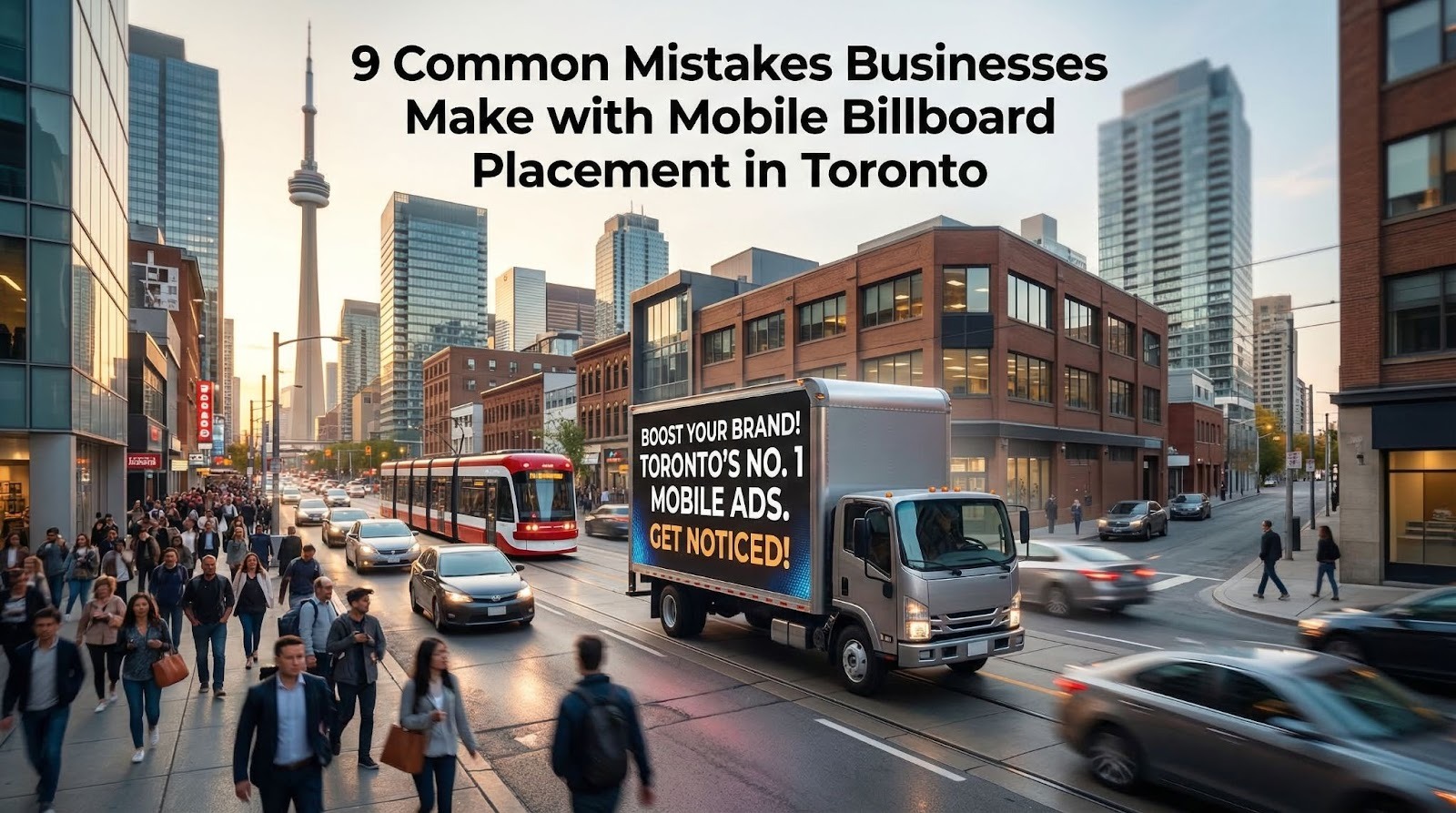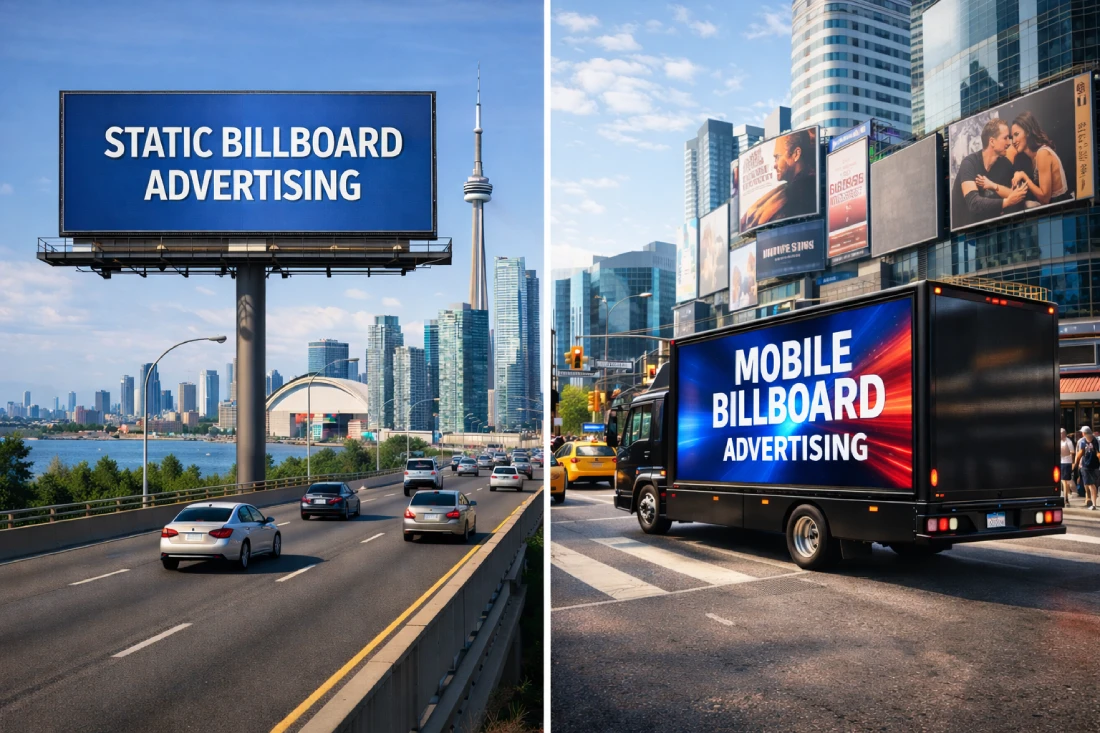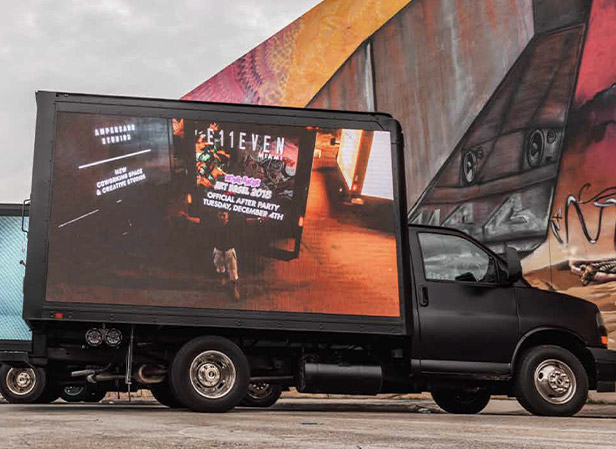
Mobile billboards have become a powerful way for businesses to stand out on Toronto’s busy streets. They can generate thousands of impressions and drive real results, such as increased foot traffic, more app downloads, higher event attendance, and stronger brand recall. For example, imagine an LED truck moving through the right neighborhood during peak hours. Its message is clear, easy to read, and hard to ignore. As a result, it doesn’t just get noticed; it encourages action.
When something goes wrong with the placement of a campaign, the chance that it will quietly waste money with little return is high. Normally, the medium will have worked fine, but businesses do not take into account the way that Toronto markets work.
If you’re planning your first mobile billboard campaign in Toronto, or trying to understand why a past one didn’t perform well, you’re not alone. Many experienced marketers make the same errors as first-time marketers. This article goes through the most common errors and how to fix them.
Toronto’s Neighborhood Diversity
Toronto appears to be one city; however, it is made up of a lot of different types of streets. Some areas, like Rosedale, are successful at getting executives to live there, while Scarborough is known as a diverse family area, and the Annex is targeted toward the artsy crowd, while Etobicoke offers suburban–style living. As a result, if you target all of “downtown Toronto“ and expect to reach your potential customers effectively, you will be disappointed. Furthermore, while it is important to advertise on busy streets like Yonge-Dundas Square, it is not likely to be where your target customers are located, so that you can reach them effectively. That is, you will have visual impressions but no significant customer interaction.
Instead, take an audience-first approach. Think about where your customers actually spend time. For example, do they visit cafes in the Annex, commute from the Beaches, or shop in North York? Once you identify this, you can plan routes that focus on those areas. As a result, your campaign reaches the right people, not just more people.
Ignoring Peak Audience Timing
While some businesses prefer daytime hours to ensure their ads will be seen by more people, daytime hours will not always work as intended.
A restaurant offering dinner specials will do better advertising close to dinner rather than in the middle of the morning when dinner is not on anyone’s mind. On the other hand, a B2B business will do better advertising to clients during early office hours (vs. nighttime) and promote nightlife at night.
Many other factors can influence how long someone will notice an advertisement, such as traffic and weather. As such, timing ads to when your audience travels through their day is important.
To improve ad results, map out your customer’s average day, and align your ad campaign with those periods of time.[6] By having your ad run when they are most likely to respond, you will reach your target market.
Overloading the Message
Mobile billboard ads are seen for only a few seconds. Because of this, trying to include too much information reduces impact.
Many ads include headlines, offers, contact details, social media, and more. As a result, viewers struggle to process anything at all.
Instead, keep it simple. Focus on one clear message, one strong visual, and one call to action. For example, a short line, a bold image, and a QR code are often enough.
Ultimately, simplicity improves recall and engagement.
Ignoring Seasonal Trends and Events
Toronto changes significantly throughout the year. In winter, fewer people are outside, while summer brings festivals, events, and higher foot traffic.
For instance, events like TIFF, Pride, and Caribana attract large crowds in specific areas. Therefore, campaigns that align with these events often perform better.
On the other hand, ignoring seasonal behavior can reduce visibility and effectiveness.
To avoid this, plan your campaign around local events and seasonal patterns. This ensures your ads appear where and when people are most active.
Underestimating the Power of Repetition
Many businesses believe a short campaign is enough. However, repeated exposure is key to building brand recall.
In most cases, people need to see a message multiple times before they remember it. Therefore, running a campaign for several weeks is more effective than a short burst.
Additionally, repeating routes helps reinforce your message. Over time, people begin to recognize and trust your brand.
Choosing Cost Over Quality
Budget matters, but cheaper routes are not always better. Low-cost areas may have less relevant audiences, which reduces overall effectiveness.
For example, a premium retail brand may not benefit from advertising in industrial zones, even if costs are lower.
Instead, focus on value rather than price. High-quality locations with the right audience often deliver better returns.
Missing the Digital Connection
Mobile billboards often spark interest. However, the next step usually happens online.
If your website, Google listing, or social media is outdated, you may lose potential customers. Therefore, it’s important to align your digital presence with your campaign.
For best results, ensure your online platforms are active, consistent, and easy to navigate. This helps convert interest into action.
Not Using LED Capabilities Fully
With LED billboards, you can change your content based on the time of day. However, many advertisers run the same ad on their campaign(s) day in and day out. Instead of using the same ad for every hour of every day, you should change your ad based on the time of day and where your billboard is located.
For example, as a restaurant, you can advertise breakfast food in the morning hours and dinner food in the evening hours. By updating your ad with relevant content, you‘ll keep your ads fresh and interesting to your audience.
Launching Without Clear Metrics
Even after your mobile billboard ad reaches the public, it’s essential to track the results for effective improvement: this helps inform the decision–making processes for future campaigns. Make sure you set definite benchmarks before launching your campaign for determining success (store visits, website traffic, etc.). Monitor these good benchmarks with the data at hand.
Monitoring your mobile billboard campaigns after the launch will allow for analysis and refinement of future campaigns, resulting in improved results. Toronto loves to reward well-planned and thought-out advertising campaigns. Thus, understanding and avoiding the top mistakes above will create a more effective and results-oriented mobile billboard strategy.
FAQs:
1. What is the typical cost to rent a mobile billboard truck in Toronto?
Pricing varies significantly based on the type of vehicle (LED truck vs. static wrap), the duration of the campaign, and the specific routes required. While many businesses look for the cheapest option, focusing solely on cost often leads to poor placement in low-traffic or irrelevant industrial zones. It is better to budget for quality routes that target a specific audience to ensure a return on investment.
2. How are the best routes chosen for a mobile billboard campaign?
Instead of trying to cover all of “downtown Toronto,” an audience-first approach is recommended. Identifying where specific customers actually live, work, and commute is essential. For example, targeting young professionals might involve focusing on the Annex or Liberty Village, whereas family-oriented services perform better in Scarborough or Etobicoke. High-traffic areas like Yonge-Dundas Square offer deep impressions but may not generate quality interactions if the target audience is not present.
3. What is the best time of day to run a mobile billboard?
The optimal timing depends entirely on the business type. A restaurant promoting dinner specials should schedule routes in the late afternoon, while a B2B service will see better engagement during morning commutes or early office hours. Running daytime ads for nightlife promotions should be avoided, and vice versa. Mapping out the customer’s daily routine is key to aligning the ad with their mindset.
4. What content should be displayed on an LED billboard for maximum effectiveness?
Simplicity is critical. Since viewers typically have only a few seconds to absorb the message, overloading the screen with headlines, contact details, and social media handles should be avoided. Focusing on one clear message, one strong visual, and a single call to action—such as a short line, a bold image, or a scannable QR code- is recommended.
5. How long should a mobile billboard campaign run to see results?
While a short burst may seem cost-effective, repeated exposure is necessary to build brand recall. Most people need to see a message multiple times before taking action. Running a campaign for several weeks with repeating routes is generally more effective than a one-day flash campaign, as it reinforces recognition and trust with Toronto commuters.
6. Can ad content be changed during the campaign?
Yes, if an LED mobile billboard is used, content can be changed in real-time. To maximize impact, updating the creative based on the time of day or location is recommended. For instance, a restaurant can advertise breakfast sandwiches during the morning rush and switch to dinner specials in the evening, keeping the content relevant and engaging for viewers.
7. How is the success of a mobile billboard campaign tracked?
Clear benchmarks should be set before launching. Determining what “success” looks like for the business, whether increased foot traffic, website visits, app downloads, or QR code scans, is essential. Ensuring the digital presence (website, Google listing, social media) is aligned with the campaign allows for monitoring spikes in engagement and accurately measuring return on investment.
8. Does seasonality affect mobile billboard effectiveness in Toronto?
Absolutely. Toronto’s seasons drastically change consumer behavior. Summer offers high foot traffic due to festivals like Caribana, Pride, and TIFF, making it ideal for high-visibility campaigns. Conversely, winter requires strategic planning as fewer people are outside. Aligning campaigns with local events and seasonal patterns ensures ads appear where and when people are most active.