If you have been selling homes in Toronto for a while, you know how a slow open house feels. You did everything right. The place is staged, the photos are good, the price is fair, and still only a handful of people walk through the door all afternoon.
Usually the home isn’t the issue. There are just so many listings going up across the city that buyers miss a lot of them, even ones they would have liked. Open house signs bring in some foot traffic from the immediate area, but that’s about all they can do.
What is mobile billboard advertising?
It’s a truck fitted with big LED screens that either drives a set route or parks somewhere busy for a few hours. The screens can show your listing photos, a short video of the home, the price, and the open house time. Because everything is digital, you can change what’s on the screen fairly quickly, for example, if the price changes or you set an offer date. Lots of brands already use mobile advertising Toronto campaigns for product launches and events, and it works for a property launch in much the same way.
Reasons mobile billboards can strengthen real estate marketing in Toronto
Here are some of the reasons why mobile billboards can actually strengthen the real estate marketing in Toronto:
1. Create more visibility for new listings
Most of the interest in a listing comes in the first week or so. Getting it onto a large screen around the city during that time helps buyers notice it while it’s still new.
2. Target high-traffic GTA areas
You get to choose the route. It could be the financial district at lunchtime, Yonge and Eglinton during rush hour, or near another open house on a Sunday afternoon. Picking places based on where your buyers actually spend time makes property promotion GTA a lot more focused than putting out signs and hoping.
3. Make the property stand out
The screens are bright and they move, so people do look at them. Around 89% of people say they notice mobile LED billboards.
4. Support open house promotion
On the day of the open house, the truck can park near the property with the address and directions on the screen.
5. Track campaign performance
A lot of agents do not think about this piece ahead of time. Some providers use device ID tracking. It works by counting phones that show up within about 75 feet of the truck. After the campaign ends, you get real numbers. You see how many people were around and about how long they stayed focused. This is different from a vague guess.
Mobile billboard ROI: What real estate agents should measure?
Start with your provider’s report. It lists impressions and dwell time. That is a decent first step.
Look at visits to the listing page. Also compare your open house numbers to what you usually see. Count how many people showed up. Then track calls and show requests.
The last test is the sale. Note how long the home sat on the market. Also compare the sale price to the asking price.
As an example, one two-day campaign for a Toronto listing led to 31 showings, and the home sold for $100K over asking within that time.
Mobile billboards vs. open house signs: what's the difference?
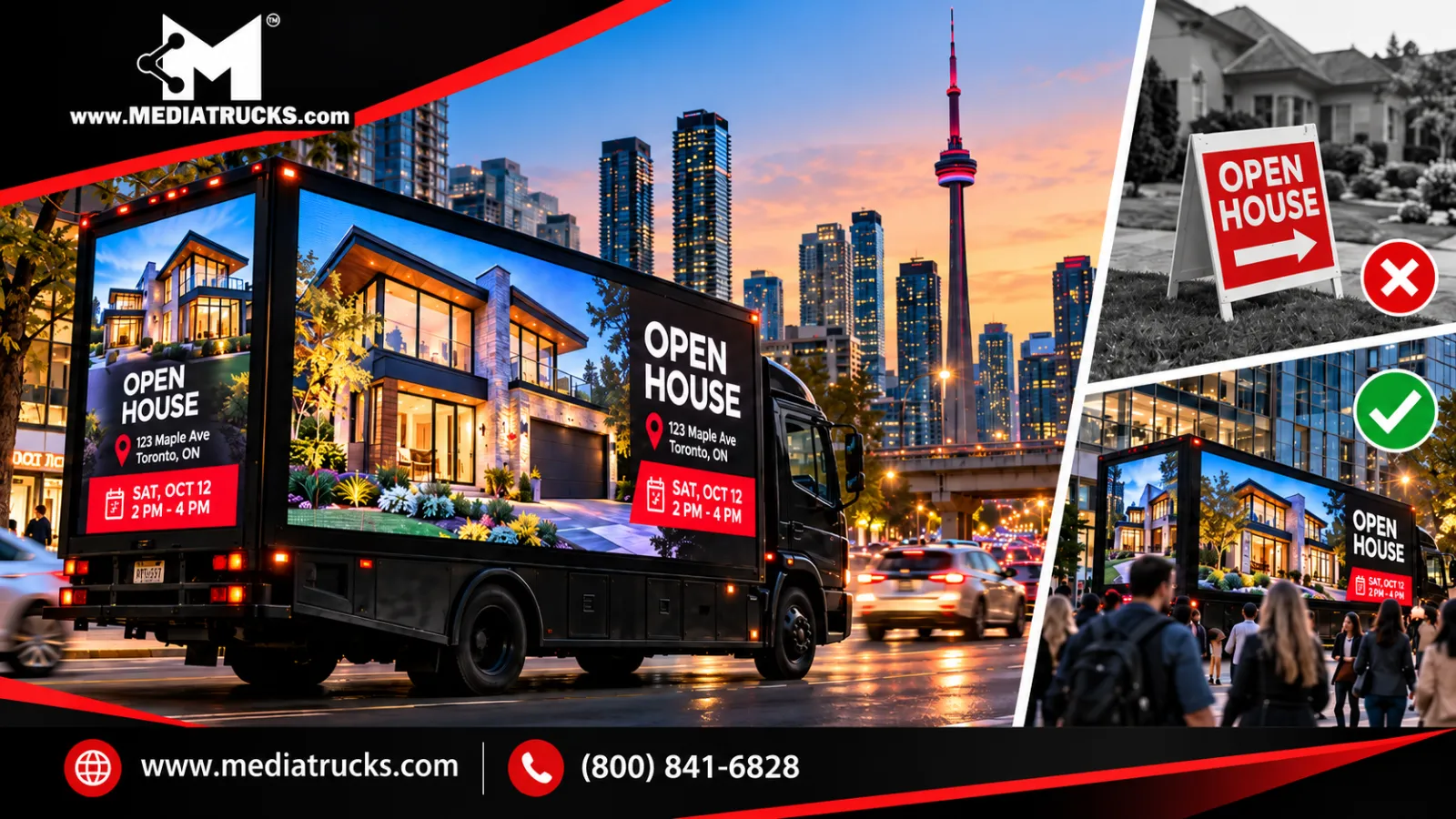
Signs are fixed, local, and almost free, and they don’t give you any information about who saw them. A billboard truck costs more, but it goes to where buyers are, reaches a much bigger audience, and can come with a report afterwards.
How to build a mobile billboard campaign for a Toronto listing
1. Choose the campaign objective
First, figure out what you want your campaign to achieve. Do you want more people to show up at the open house? Or do you want more eyes on a pricey listing? Maybe you want more name recognition for yourself in a new part of town.
2. Select strategic routes
The route should depend on who’s likely to buy the home. For a downtown condo, that’s probably people who work in the core, so routes near offices and subway stations make sense. For a family home in Oakville or Burlington, you’d be better off near schools, community centers, and shopping plazas on a weekend.
3. Track the results
When the campaign ends, ask for the full report and compare it with your listing traffic and inquiries for those dates. This will tell you whether it’s worth using again for future listings.
Combining mobile billboards with other real estate marketing channels
The truck works better when it’s part of everything else you’re doing for the listing. Some providers can send the collected device IDs to digital ad platforms, which means someone who passed the truck downtown might see the same listing in a social media ad later that day. Along with your MLS listing, an email to your contacts, and your regular signs, it gives you an outdoor advertising Toronto plan that covers both the street and people’s phones.
When should a real estate agent consider mobile billboard advertising?
This option will not fit every listing. It can also be a good fit for areas where demand is high and competition is tight. This approach can give that extra visibility.
Can mobile billboards work with audio visual rental campaigns?
The truck brings people in from the surrounding area, and the on-site setup gives them something worth staying for. Media Trucks provides both, so you only need to deal with one company.